


When it comes to How Often Should I Schedule Dental Cleanings for My Pet in Parrish, FL?, yearly dental cleanings are recommended to prevent oral health complications in cats and dogs. Dental disease affects over 80% of dogs and 70% of cats by age three. Breeds prone to oral issues may need checkups more frequently than once annually, as advised by your veterinarian.
Yearly dental cleanings protect most Parrish, FL pets from plaque, tartar, and gum disease, according to veterinary guidance from Wellness Animal Hospital. Small-breed dogs and senior cats often need checkups more frequently due to higher documented oral health risks. A veterinarian evaluates each pet’s mouth at the first dental visit and builds a personalized cleaning schedule from there.
How Often Should I Schedule Dental Cleanings for My Pet in Parrish, FL?
Most dogs and cats in Parrish benefit from a professional dental cleaning once a year. Veterinary teams serving Manatee County recommend this annual schedule to prevent tartar buildup, gum disease, and painful infections before they take hold. Skipping cleanings does not save money in the long run. It often leads to costlier procedures once decay or infection sets in.
A single number does not fit every pet, though. Dental cleanings for pets in Parrish, FL depend on several individual factors, including breed, age, diet, and existing oral health. Small-breed dogs, for example, are prone to crowded teeth and faster tartar accumulation. Senior pets often need closer monitoring as gum tissue thins with age.
What happens during a dental cleaning visit?
A cleaning appointment involves more than scraping tartar off teeth. The veterinary team also performs a thorough exam alongside the cleaning, checking for early signs of trouble such as loose teeth, inflamed gums, or hidden infection under the gumline. Catching these issues early allows for quick intervention, sparing pets from months of undetected discomfort.
Does my pet’s breed or age change how often cleanings are needed?
Yes. Small-breed dogs and senior cats and dogs frequently need checkups more often than the standard yearly visit. A veterinarian evaluates each pet individually and builds a personalized cleaning schedule rather than applying a blanket rule.
Local veterinary teams treat dental health as a top wellness priority, not an optional add-on. For Parrish families weighing whether an annual visit is enough:
- Small-breed dogs: often need cleanings more than once yearly
- Senior pets: benefit from closer monitoring as gum disease risk rises
- Cats and larger dogs: typically do well on a yearly cleaning schedule, barring other risk factors
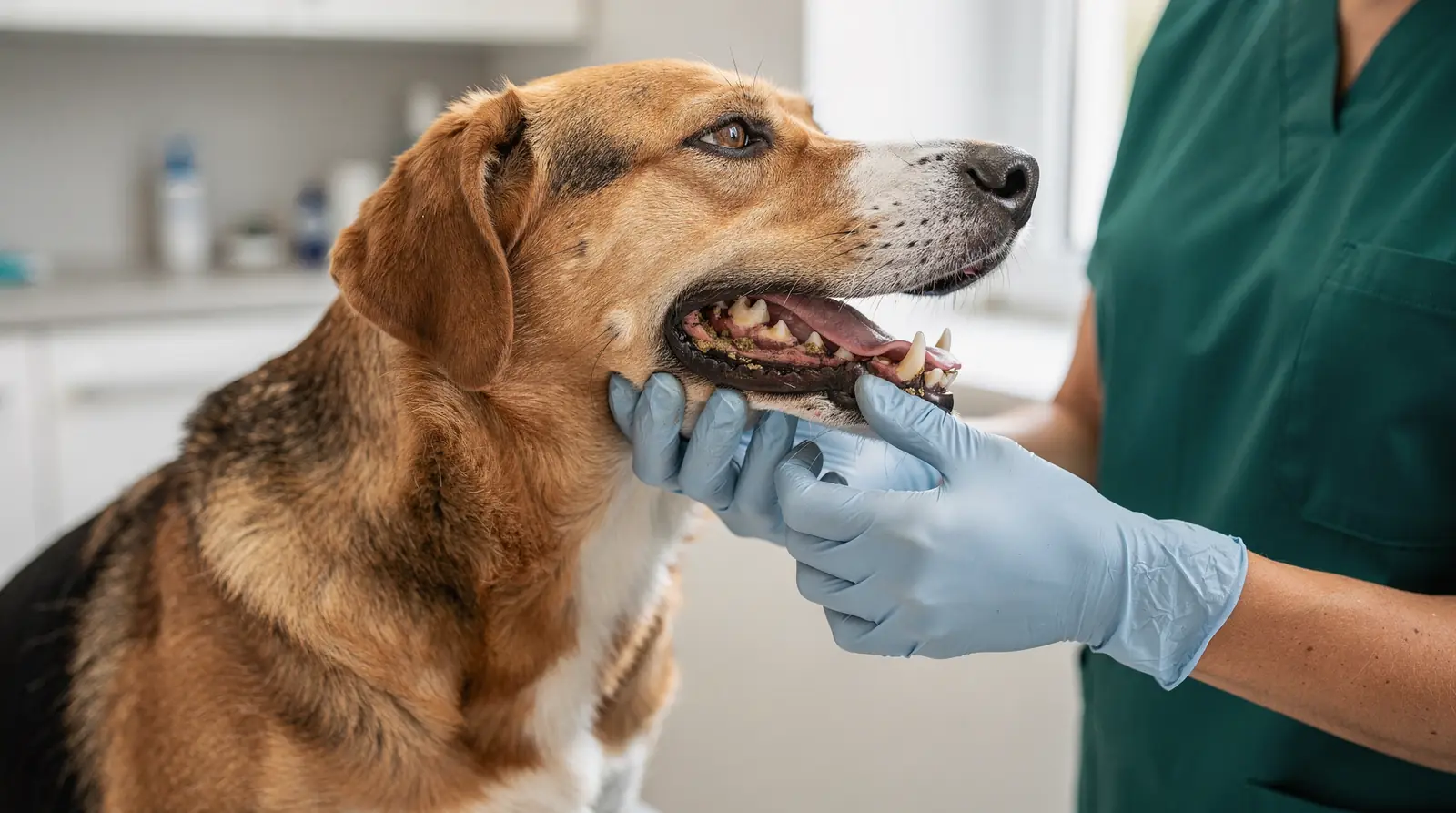
What Signs Mean Your Pet Needs a Dental Checkup Now?
Visible tartar on a dog or cat’s teeth signals a checkup is overdue, not optional. Manatee County’s warm, humid climate encourages bacteria growth in a pet’s mouth, so plaque hardens into tartar faster than many Parrish owners expect. Waiting until the next scheduled visit risks letting a manageable problem turn into a painful one.
Several other symptoms deserve immediate attention rather than a wait-and-see approach.
What symptoms mean a pet needs to see a vet right away?
Loose or broken teeth top the list of urgent concerns, since fractures often expose sensitive nerve tissue. Extra teeth or retained baby teeth can crowd the jaw and trap debris, leading to infection. Bleeding from the mouth, whether from the gums or a tooth socket, always warrants a same-week appointment rather than a routine one.
Does bad breath always mean a dental problem?
Persistent bad breath rarely comes from diet alone. Pain or swelling around the mouth, along with reduced appetite, often accompanies the odor and points to gum disease or an abscess forming beneath the surface.
Pet owners in Parrish should watch for this combination of warning signs:
- Tartar buildup or yellow-brown crust along the gumline
- Loose, broken, or missing teeth
- Bleeding from the mouth or gums
- Persistent bad breath
- Swelling or visible pain when eating
- Sudden drop in appetite or reluctance to chew
Local veterinary teams focus on educating Parrish pet owners about the best home habits for keeping a pet’s mouth disease-free between visits. Catching these signs early, rather than dismissing them as minor, protects a pet’s comfort and long-term health.

Does Your Pet’s Breed or Age Change the Schedule?
Yes, breed and age shift how often a Parrish pet needs professional dental care. Some dog and cat breeds carry a higher documented risk for oral health complications. Those pets may need checkups more than once a year. A senior cat with crowded teeth faces different risks than a young Labrador with plenty of jaw room. The frequency of dental cleanings depends on several factors unique to each animal, not a one-size-fits-all calendar.
Which breeds need more frequent dental visits?
Small-breed dogs common in Manatee County households, like Chihuahuas, Yorkies, and dachshunds, tend to develop crowded teeth that trap plaque faster. Cats and dogs with shorter snouts also face elevated risk due to tooth crowding. These pets often benefit from checkups beyond the standard yearly visit.
Does an older pet need cleanings more often?
Age changes the equation, too. Years of plaque buildup catch up with senior pets, making gum disease and tooth loss more likely without closer monitoring. A veterinarian evaluates each pet’s mouth and history before recommending a schedule.
Rather than guessing, Parrish pet owners get answers directly from the exam room. A veterinarian advises owners on the best care plan starting at the very first dental appointment, factoring in breed, age, and existing wear on the teeth. From there, a personalized dental care plan takes shape:
- Small-breed and apartment-faced pets: more frequent monitoring
- Senior pets: closer attention to gum recession and tooth stability
- Young, low-risk breeds: standard annual cleaning
Personalized, gentle dental care remains the goal for every pet across the Parrish community, adjusted as circumstances change year to year.
What Really Happens During a Professional Cleaning?
Professional dental cleanings involve far more than a quick polish. Veterinary teams scale each tooth to strip away tartar hiding above. Below the gumline, then smooth the enamel so plaque has a harder time sticking back. For Parrish, FL dog and cat owners, understanding this process answers the common question of how often should I schedule dental cleanings for my pet in Parrish, FL. And why the answer depends on what actually happens in the exam room.
Brushing at home matters, but it only reaches the surface. A true veterinary cleaning goes far beyond what brushing alone can accomplish, reaching under the gumline where disease actually starts. That gap is exactly why annual professional visits remain non-negotiable for pets across Manatee County.
Are non-anesthetic cleanings a safe shortcut?
Non-anesthetic “cleanings” skip the parts of the mouth that matter most. Without anesthesia, veterinarians cannot safely scale below the gumline or evaluate each tooth root. Advanced dental care, including surgical extractions when needed, requires proper anesthesia to protect the pet and do the job thoroughly.
A complete at-home and professional routine includes several layers of care:
- Daily or regular tooth brushing
- Veterinary-approved dental chews
- Routine oral exams during wellness visits
- Full anesthetic cleanings on a schedule set by a veterinarian
No single step replaces the others. Small-breed dogs and senior pets in Parrish often need this full combination more frequently. Tartar accumulates faster and gum disease progresses quietly. Skipping professional scaling in favor of chews or brushing alone leaves the real problem untouched, right where owners can’t see it.
Why Skipping Cleanings Puts Your Pet at Risk?
Skipped cleanings allow plaque to harden into tartar, setting the stage for infection and pain. Dental disease already affects over 80% of dogs. 70% of cats by age three, a statistic that surprises many Manatee County pet owners. Asking how often should I schedule dental cleanings for my pet in Parrish, FL becomes far more urgent once that number sinks in.
Neglect rarely stays confined to the mouth. Untreated dental disease leads to pain, tooth loss, and, in more severe cases, systemic damage to the heart and kidneys. A small-breed dog’s tiny jaw or a senior cat’s aging organs make these consequences hit harder and faster.
What happens if dental disease goes untreated for years?
Bacteria from infected gums enters the bloodstream and travels to major organs. Over time, this contributes to chronic conditions well beyond bad breath. Waiting years between cleanings turns a preventable problem into a costly, painful one.
Does dental health really affect lifespan?
Yes. Pets with clean, healthy teeth have been shown to live 2 to 3 years longer than those with untreated dental disease. That gap represents meaningful time with a beloved companion.
Consequences of skipping cleanings include:
- Painful tartar buildup and gum inflammation
- Tooth loss requiring extraction
- Increased risk of heart and kidney complications
- Shortened lifespan compared to pets with healthy teeth
Wellness Animal Hospital, based in Lakewood Ranch, FL, serves Parrish families seeking advanced dental protocols designed to protect long-term health and add years to a pet’s life.
Regular dental cleanings form the foundation of your pet’s long-term health and happiness. By staying committed to a professional cleaning schedule tailored to your individual pet’s needs, you invest in preventing serious complications and ensuring your companion enjoys a comfortable, vibrant life. Your veterinarian remains your best partner in this journey, offering personalized guidance based on your pet’s unique dental profile. Prioritize these preventive visits today, and your pet will thank you with years of healthy smiles ahead.
FAQ
How often should you schedule dental cleanings for your pet in Parrish, FL?
This annual schedule prevents tartar buildup, gum disease, and painful infections before they take hold.
Do breed and age change how often a pet needs cleanings?
Yes. Small-breed dogs often need cleanings more than once yearly. Senior pets benefit from closer monitoring as gum disease risk rises with age.
What signs mean a pet needs a dental checkup right away?
Visible tartar, loose or broken teeth, and bleeding from the mouth signal an urgent need. Retained baby teeth also crowd the jaw, trap debris, and lead to infection.
How often should cats get dental cleanings?
Most cats do well with a professional cleaning once a year, similar to dogs. Senior cats and cats with crowded or misaligned teeth often need closer monitoring, since gum disease can progress quietly and go unnoticed until it’s advanced.
What does a professional pet teeth cleaning involve?
A professional cleaning includes scaling above and below the gumline, polishing the teeth, and a full oral exam under anesthesia to check for loose teeth, hidden infection, or other problems that aren’t visible during a routine wellness visit. This level of care goes well beyond what at-home brushing or non-anesthetic cleanings can accomplish.
Conclusion
Regular dental cleanings are one of the most effective ways to protect a pet’s comfort, health, and lifespan. For most dogs and cats in Parrish, that means an annual professional cleaning, with small-breed dogs and senior pets often needing closer monitoring in between. Watching for warning signs like tartar buildup, bad breath, or bleeding gums, and pairing at-home care with regular veterinary exams, helps catch problems early before they become painful or costly. A veterinarian remains the best partner in building a dental care plan suited to each pet’s breed, age, and individual needs — a small investment of time that pays off in years of healthier, happier life together.


